
Everything You Need to Know Before Visiting Italy’s Most Famous Archaeological Site
Pompeii is one of those rare places that changes the way you think about history.
Walking through its ancient streets isn’t like visiting a museum—it’s like stepping into a city where life suddenly paused nearly 2,000 years ago.
You can stand inside homes where families once gathered for dinner, stroll through marketplaces where merchants sold their goods, and imagine the conversations that once filled the streets.
When Mount Vesuvius erupted in 79 AD, volcanic ash preserved Pompeii beneath layers of debris, creating one of the world’s most extraordinary archaeological sites. Today, it’s a UNESCO World Heritage Site and one of Italy’s most unforgettable experiences.
Whether you’re visiting from Naples, Sorrento, or the Amalfi Coast, this guide will help you plan an incredible day exploring Pompeii.
At a Glance
📍 Location: Pompeii (pom-PEH-ee), Campania
🌋 Famous For: Ancient Roman ruins preserved by the eruption of Mount Vesuvius
⏳ Recommended Visit: 4–6 hours
🚆 Best Transportation: Circumvesuviana train from Naples or Sorrento
👩 Solo Traveler Friendly: ⭐⭐⭐⭐⭐
💶 Budget: €€
🥾 Difficulty: Moderate walking on uneven ancient streets
☀️ Best Seasons: March–May & September–November
Why Visit Pompeii?
Pompeii isn’t just about ruins.
It’s about people.
Unlike many archaeological sites, Pompeii still feels like a living city.
You can recognize:
🏠 Family homes
🍞 Bakeries
🍷 Taverns
🏛️ Public squares
🎭 Entertainment venues
Walking through Pompeii reminds you that ancient Romans worried about many of the same things we do today—work, family, food, friendships, and everyday life.
What Happened at Pompeii?
On August 24 (or possibly later in the autumn, according to more recent archaeological evidence), Mount Vesuviuserupted, burying Pompeii beneath volcanic ash and pumice.
The ash preserved buildings, frescoes, mosaics, tools, and even casts of people, providing an unparalleled glimpse into daily Roman life. Today, archaeologists continue to uncover new discoveries throughout the site.
Tickets & Planning Tips
Purchase tickets in advance during peak travel seasons to save time.
Allow at least half a day to explore. If you’re passionate about history, a full day is even better.
For travelers who enjoy learning the stories behind what they’re seeing, consider joining a guided tour or renting an audio guide.
What Not to Miss
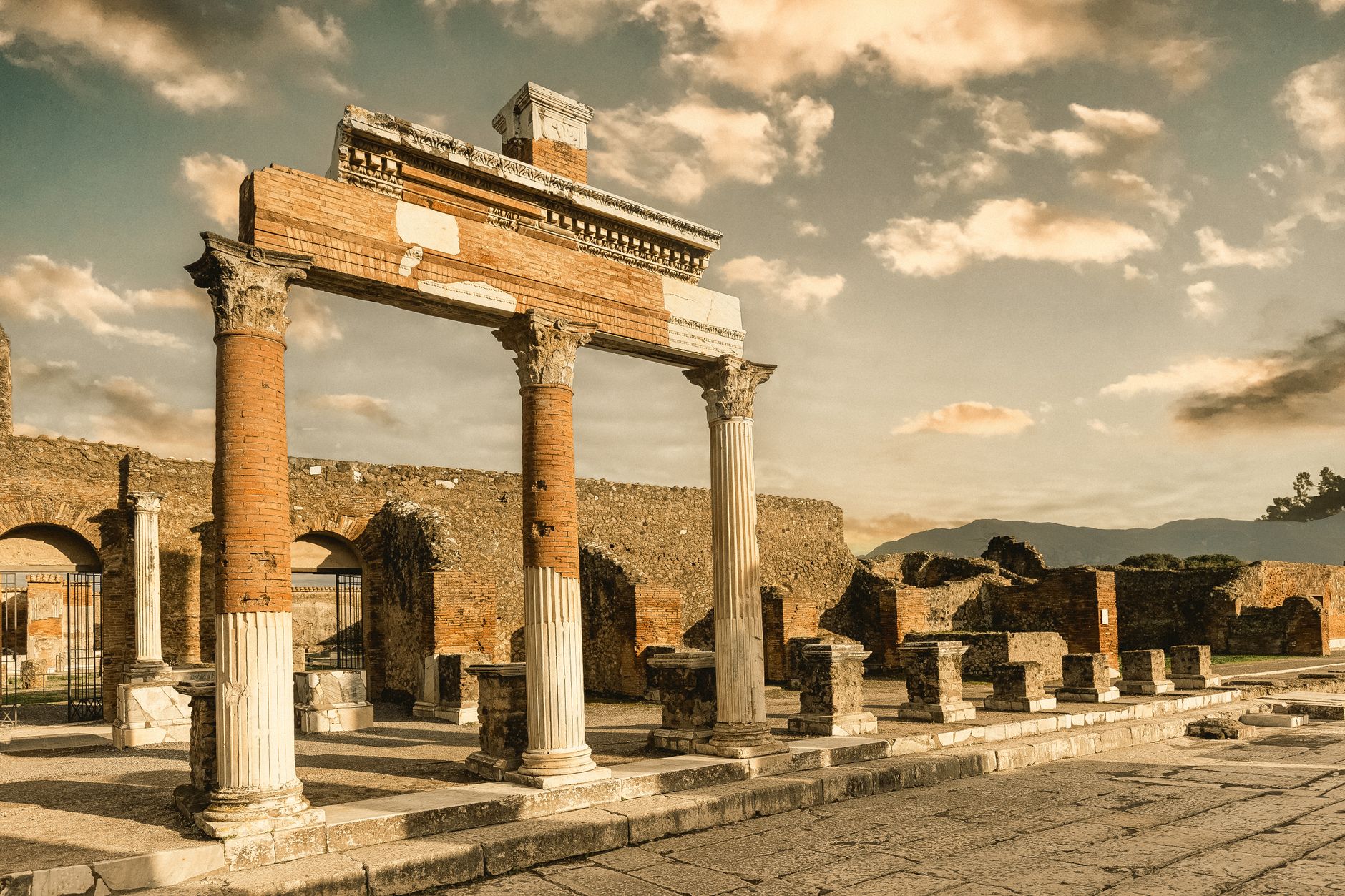
🏛️ The Forum
The heart of ancient Pompeii.
Government, business, religion, and daily life all revolved around this central square.
🏠 House of the Faun
One of Pompeii’s largest and most luxurious homes.
Don’t miss the beautiful mosaics that showcase the wealth of its former owners.
🎭 The Amphitheater
Built around 70 BC, this is one of the oldest surviving Roman amphitheaters in the world.
Imagine thousands of spectators gathering here for games and entertainment.
🍞 Ancient Bakery
One of the most fascinating stops.
You’ll see stone mills, ovens, and even carbonized loaves of bread that survived the eruption.
It’s a powerful reminder that ordinary life was interrupted in an instant.
🎨 Preserved Frescoes
Throughout Pompeii, vibrant wall paintings still decorate homes and public buildings.
These colorful works of art offer insight into Roman fashion, mythology, and daily life.
Pompeii Then vs. Now
Then:
🏠 Around 11,000–15,000 residents called Pompeii home.
🍞 Bakers began work before sunrise.
🏛️ Citizens gathered in the Forum to discuss politics and business.
🍷 Taverns buzzed with conversation over wine.
🌿 Elegant gardens filled private homes.
Now:
Visitors from around the world walk those same streets, learning how remarkably familiar—and fragile—everyday life can be.
Should You Visit Mount Vesuvius Too?
If you have the time, absolutely.
Standing on the volcano that shaped Pompeii’s history offers incredible perspective—and spectacular views over the Bay of Naples.
Many visitors combine both destinations in one day, but if your schedule allows, giving each its own day creates a much more relaxed experience.
Getting There
From Naples:
🚆 Circumvesuviana train to Pompei Scavi – Villa dei Misteri
From Sorrento:
🚆 Direct Circumvesuviana train
Guided tours from Naples and the Amalfi Coast are another excellent option if you’d rather not navigate transportation on your own.
Instagram & TikTok Worthy Stops
📍 Most Photogenic Spot: The Forum with Mount Vesuvius in the background
🌋 Best View: Looking across the ruins toward Vesuvius
🏛️ Best Historical Photo: The Amphitheater
🎥 Best Reel Idea: Walking down Pompeii’s original stone streets
📷 Most Underrated Spot: The quiet residential streets away from the busiest crowds
Where to Eat Nearby
⭐ Sondra Recommends
If you’re continuing on to Naples after your visit, reward yourself with an authentic Neapolitan pizza and explore the city’s incredible food scene.
➡️ Related Post: Naples Food Guide: What to Eat, Where to Eat & Local Specialties
Local Favorites
Many family-run trattorias just outside the archaeological park serve classic Campanian dishes like gnocchi alla sorrentina, fresh seafood, and local wines. Skip the first restaurant you see at the entrance and wander a few streets farther for a more relaxed atmosphere.
Sondra’s Packing Tip
Pompeii’s streets are original Roman stone.
Wear comfortable shoes with good grip, bring a refillable water bottle, sunscreen, and a hat—especially if you’re visiting between late spring and early autumn. There is very little shade throughout much of the site.
Why I Love Pompeii
Pompeii reminds me that travel isn’t just about seeing beautiful places—it’s about understanding the people who came before us.
Standing in an ancient bakery or looking at a family’s courtyard, it’s impossible not to think about how similar our lives really are. We all gather around meals, celebrate milestones, build homes, and make plans for tomorrow.
Pompeii makes history feel deeply human, and that’s what makes it one of the most moving places I’ve ever visited in Italy.
Italian Phrase of the Week
“Quanto tempo ci vuole?”
Pronunciation:
KWAHN-toh TEM-poh chee VWOH-leh
Meaning:
“How long does it take?”
A useful phrase when asking about train rides, walking distances, guided tours, or museum visits.
Wine of the Week
Lacryma Christi del Vesuvio DOC
Pronunciation:
lah-KREE-mah KREE-stee del veh-SOO-vee-oh
Translated as “Tears of Christ,” this legendary wine is grown on the fertile volcanic slopes of Mount Vesuvius.
Flavor Notes:
🍑 Stone fruit
🌼 White flowers
🌋 Distinct mineral notes from volcanic soil
Pairs Perfectly With:
🐟 Seafood
🧀 Fresh mozzarella
🍋 Lemon pasta
🐚 Shellfish
Continue Exploring Campania
🌊 Ultimate Amalfi Coast Travel Guide: Positano, Amalfi, Ravello, Capri & Naples
🍕 Naples Food Guide: What to Eat, Where to Eat & Local Specialties
🚤 Ultimate Capri Day Trip Guide
Next in the Campania Series
🚤 Ultimate Capri Day Trip Guide: Blue Grotto, Beaches, Chairlifts & Hidden Corners
We’ll cover:
💙 The Blue Grotto
🚠 Monte Solaro
🏖️ Marina Piccola
🛍️ Capri Town
🥾 Scenic walking trails
🍋 Local lemon treats
…and how to decide whether Capri is worth visiting (spoiler: I think it absolutely is).
Leave a Reply