
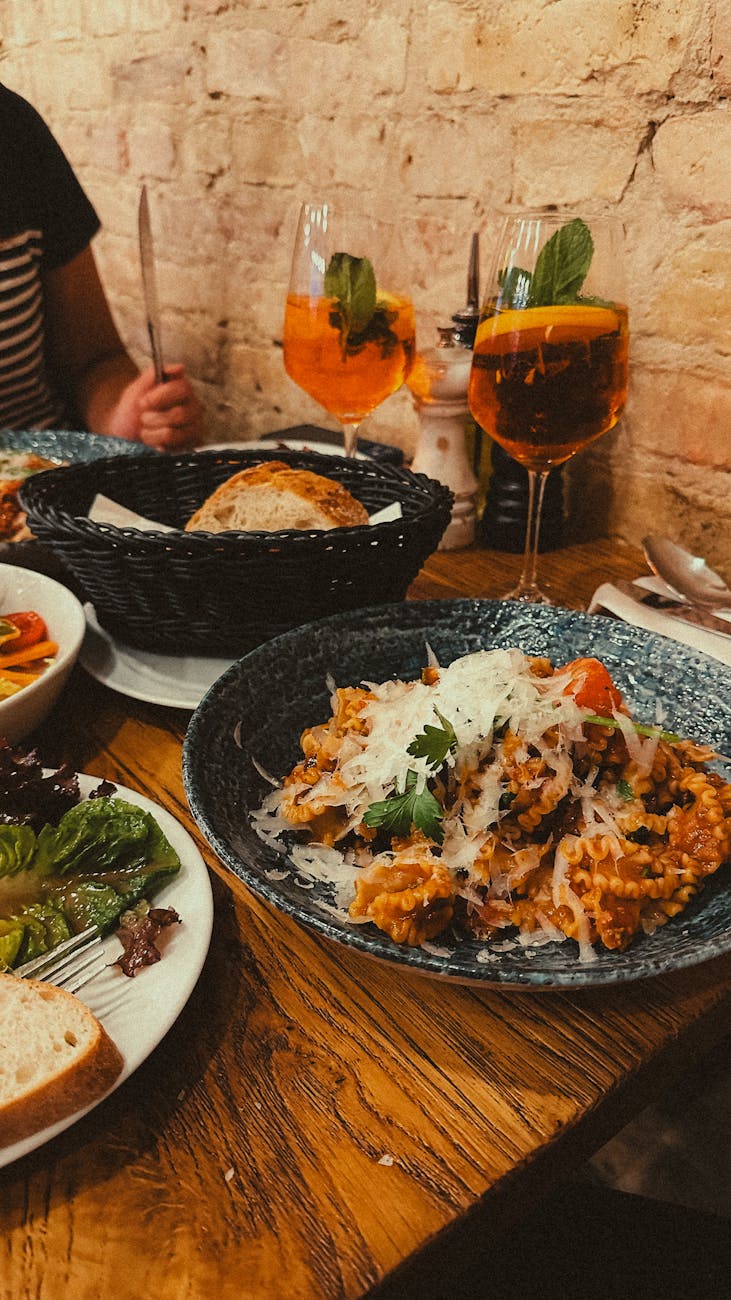
If you’ve ever sat down for dinner in Italy and wondered why there are so many courses – or when it’s acceptable to order a cappuccino (spoiler: not after dinner) – this guide is for you.
Italian dining isn’t rushed. It’s layered, intentional, and deeply rooted in tradition. Whether you’re in Florence, Rome, or a small countryside village, understanding how dinner works will completely transform your experience.
Let’s break it all down so you can dine confidently – and like a local.
Disclaimer: At the end of the day, it’s just important that you’re eating well and enjoying your meal. This guide is meant to help you understand Italian dining culture, if you so choose, but there’s no pressure!
The Philosophy of Italian Dining
In Italy, dinner is more than a meal – it’s a ritual.
- It’s about connection, not speed
- Meals are meant to be savored over hours
- Each course has a purpose (and a pace)
💡 Think: slow, intentional, and deeply enjoyable.
What Time Is Dinner in Italy?
Dinner typically starts later than in the U.S.:
- 8:00 PM – 9:00 PM (standard)
- 9:00 PM – 10:30 PM (common in summer)
Restaurants may not even open for dinner before 7:30 PM—so plan accordingly.
The Traditional Italian Meal Structure


You don’t have to order every course – but knowing them helps you navigate the menu.
Antipasto (Starter)
Light bites to open the meal.
Examples:
- Cured meats + cheeses
- Bruschetta
- Marinated vegetables
💡 Often shared with the table.
Primo (First Course)
Usually a carb-based dish – and often the star of the show.
Examples:
- Pasta (like pici, spaghetti, ravioli)
- Risotto
- Soup
👉 No meat-heavy dishes here: that comes next.
Secondo (Main Course)
The protein course.
Examples:
- Steak (bistecca alla Fiorentina)
- Roasted chicken
- Fish or seafood
Contorno (Side Dish)
Ordered separately and served alongside the secondo.
Examples:
- Roasted potatoes
- Grilled vegetables
- Simple salads
Dolci (Desserts)
Time to indulge.
Examples:
- Tiramisu
- Panna cotta
- Gelato
Caffè (Coffee)
Usually just a quick espresso.
- No milk-based drinks after meals
- Drunk quickly at the table or bar
Digestivo (After-Dinner Drink)
A small drink to help digestion.
Popular options:
- Limoncello
- Amaro
- Grappa
What About Wine?
Wine is a key part of dinner – but it’s meant to complement, not overpower.
- Red wine with meat and pasta 🍷
- White wine with seafood 🥂
- Sparkling wines occasionally
💡 House wine (vino della casa) is often affordable and surprisingly good.
What Should You Actually Order?
You don’t need to do the full five-course experience every night.
Easy, Local-Friendly Combos:
- Antipasto + Primo
- Primo + Secondo
- Primo only (totally acceptable!)
💡 Italians mix and match depending on appetite.
Italian Dining Etiquette & Expectations
✔️ Things to Know:
- No rushing – service is intentionally slow
- You have to ask for the check (“Il conto, per favore”)
- Bread is for the meal – not an appetizer with butter
- Coperto (cover charge) is normal and usually specified on your bill/receipt (typically 1-2 euro per person)
Avoid:
- Ordering a cappuccino after dinner
- Asking for substitutions (menus are curated)
- Splitting everything excessively
After Dinner: Coffee Culture Explained


Coffee in Italy is quick, simple, and strong (and my blood type, allegedly).
What to Order:
- Espresso (caffè) – the default
- Caffè macchiato – espresso with a touch of milk
💡 Cappuccino is strictly a morning drink in Italy.
Aperitivo vs Digestivo: Know the Difference
This is where many travelers get confused.
Aperitivo (Before Dinner)
- Drinks like spritz or light cocktails
- Meant to stimulate appetite
Digestivo (After Dinner)
- Stronger, herbal or citrus liqueurs
- Meant to aid digestion
👉 Think: light before, strong after
How to Truly Enjoy Dinner in Italy
- Slow down—don’t rush courses
- Savor each bite (and sip)
- Embrace the rhythm of the meal
- Focus on the experience, not just the food
Dinner Is a Lifestyle in Italy
Dining in Italy isn’t just about eating – it’s about living well.
It’s laughter echoing across a table, the clink of wine glasses, the moment you realize dinner has turned into a three-hour experience – and you don’t want it to end.
So when in Italy, don’t always plan to just grab a quick bite.
Sit down. Order another course. Stay a little longer.
That’s how you do dinner in Italy!
Leave a Reply